How Do Oral Probiotics Work for Your Oral Microbiome? (A Science-Backed Guide)
FTC Affiliate Disclosure: This article contains affiliate links. If you click through and make a purchase, we may earn a small commission at no extra cost to you. We only recommend products grounded in research and oral health benefits.
When most people think of maintaining dental hygiene, they envision aggressive brushing, rigorous flossing, and rinsing with alcohol-based mouthwashes. For generations, traditional dentistry emphasized eliminating as many microorganisms as possible to prevent tooth decay and gum disease.
However, modern microbiology has completely shifted this perspective. Researchers now understand that your mouth relies on a delicate balance of beneficial microorganisms. Completely sterilizing your oral cavity often does more harm than good by stripping away your body’s first line of defense. At Oral Microbiome Hub, our mission is to explore these science-backed shifts and help you navigate modern, evidence-based approaches to dental care.
This brings us to a crucial question: how do oral probiotics work to restore balance, protect tooth enamel, and support overall dental health? In this guide, we break down the science behind oral microbiome probiotics, how they differ from gut supplements, and why delivering these beneficial strains directly to your mouth is key.
What Is the Oral Microbiome and Why Does It Matter?
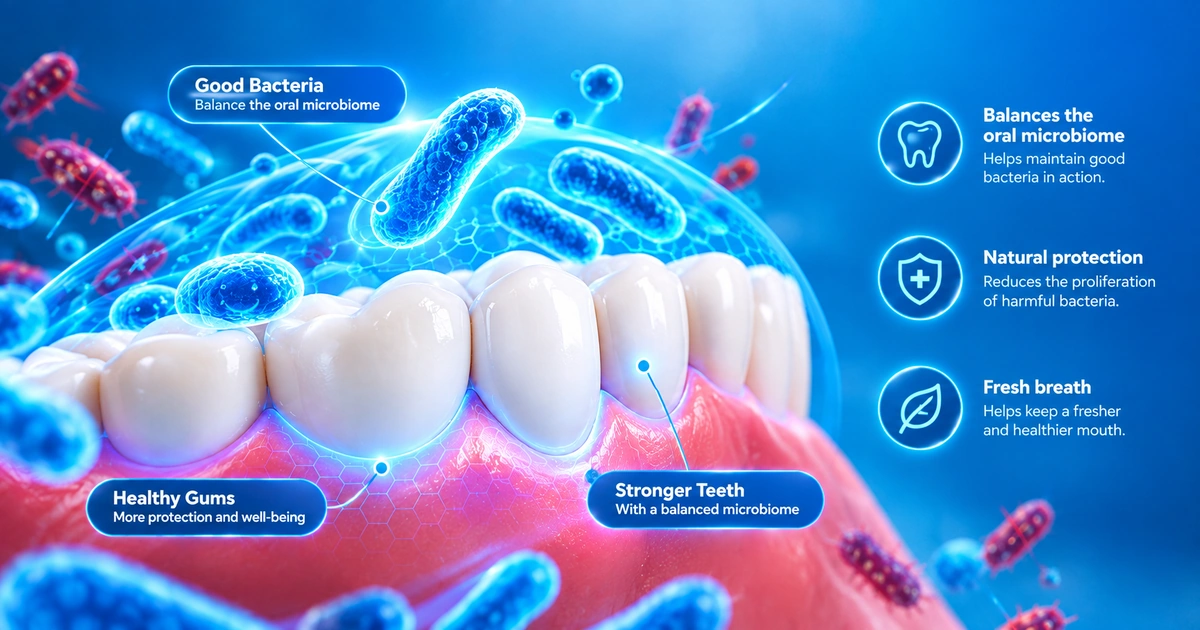
The human mouth is home to over 700 species of bacteria, fungi, and viruses, collectively known as the oral microbiome. After the gut, it is the second most diverse microbial community in the human body.
Under normal, healthy conditions, beneficial bacterial strains live in symbiosis with your oral tissues. They help regulate the pH of your saliva, protect your gums from inflammation, and prevent harmful pathogens from colonizing tooth surfaces.
However, modern lifestyle factors frequently disrupt this balance:
- Overuse of Alcohol-Based Mouthwashes: Alcohol kills both bad and good bacteria indiscriminately, leaving the mouth vulnerable to rapid repopulation by opportunistic pathogens.
- Diets High in Processed Sugars: Sugar feeds acid-producing bacteria like Streptococcus mutans, which erode enamel and cause cavities.
- Chronic Stress and Low Saliva Production: Dry mouth accelerates bacterial buildup, leading to persistent bad breath (halitosis) and gum irritation.
When bad bacteria outnumber beneficial strains—a state known as dysbiosis—you begin to experience chronic issues like bleeding gums, enamel erosion, and persistent malodor.
How Do Oral Probiotics Work? The 4 Main Mechanisms
Understanding how oral probiotics work requires looking at how micro-flora interact with tissue inside the oral cavity. Unlike gut probiotics, which are designed to survive stomach acid and colonize the intestines, oral probiotics must directly interact with your gums, tongue, inner cheeks, and teeth.
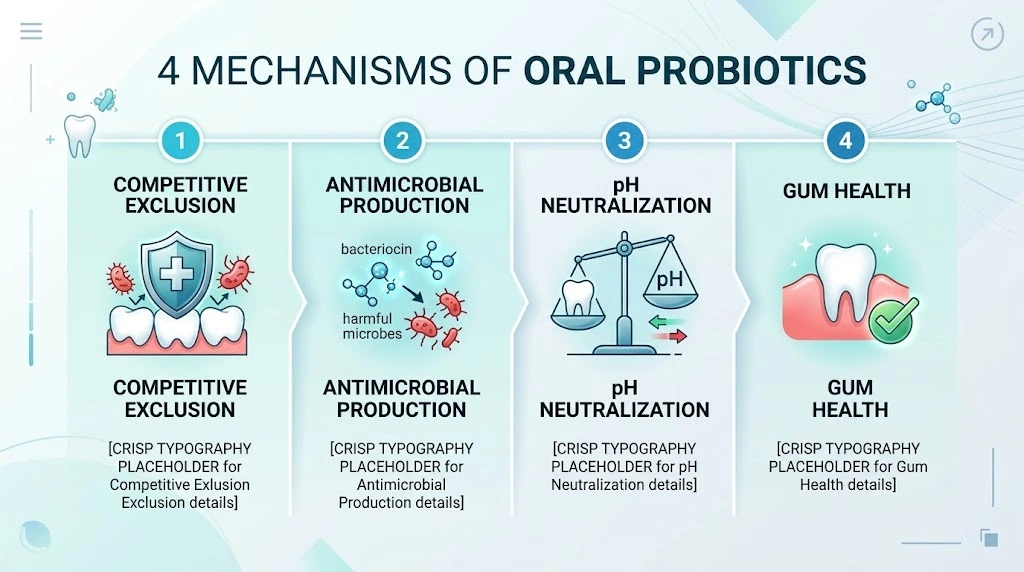
Here are the four primary mechanisms through which oral microbiome probiotics restore dental health:
1. Competitive Exclusion of Harmful Pathogens
Probiotic bacteria physically occupy attachment sites on your gums and teeth. By taking up space and consuming available nutrients, they leave no room for harmful pathogens to settle, build biofilms (plaque), and multiply.
2. Production of Natural Antimicrobial Compounds
Specific clinical-grade probiotic strains produce substances called bacteriocins and hydrogen peroxide. These natural compounds selectively suppress bad bacteria without causing wholesale destruction to the rest of the ecosystem.
3. Neutralization of Salivary pH
Acidic environments in the mouth wear down tooth enamel and accelerate decay. Beneficial bacteria assist in maintaining a neutral or slightly alkaline pH, which prevents acid-induced erosion and supports natural enamel remineralization.
4. Down-Regulation of Gum Inflammation
Certain probiotic strains interact directly with immune receptors in the gum tissue. They help reduce the production of inflammatory cytokines, easing the swelling and bleeding associated with early-stage gingivitis and periodontal discomfort.
Key Takeaway: Oral probiotics do not simply “add good bacteria.” They actively alter the biological environment of your mouth to prevent disease before it starts.
Why Chewable Tablets Beat Swallowed Capsules
A common point of confusion is whether standard intestinal probiotic capsules can benefit oral health. The short answer is no.
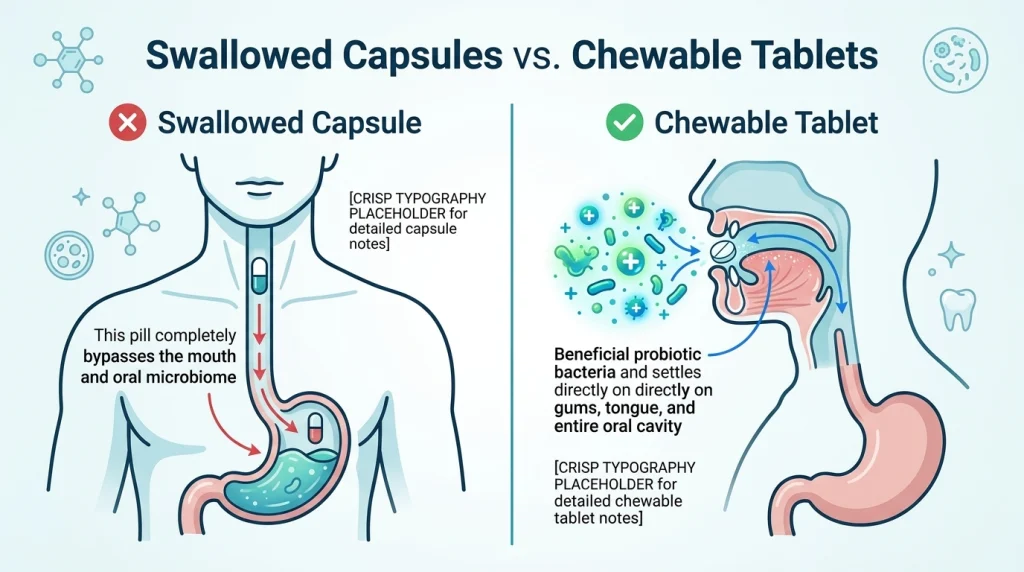
When you swallow a traditional probiotic capsule, the protective shell is specifically engineered to survive stomach acid and dissolve in the gut. While this is great for digestion, the beneficial strains never spend time inside your mouth.
To get true benefits of oral probiotics, the strains must make direct contact with your oral tissues. This is why delivery methods matter immensely:
- Chewable Tablets or Lozenges: As you chew or dissolve a tablet, beneficial bacteria are released directly into your saliva, allowing them to attach immediately to gums, tongue, and tooth surfaces.
- Longer Retention Time: Chewable formulas ensure high concentrations of active strains colonize the oral cavity before being swallowed.
When evaluating chewable supplements, look for formulas that feature targeted strains known for oral efficacy, such as Lactobacillus reuteri, Lactobacillus paracasei, and Bifidobacterium lactis. Many advanced formulations, such as those analyzed in our ProDentim review, combine these clinical-grade strains into convenient chewable tablets designed specifically for daily oral care.
What Conditions Can Oral Probiotics Help Address?
Integrating targeted probiotics into your routine offers broad-spectrum support for common oral issues:
- Persistent Bad Breath (Halitosis): By suppressing volatile sulfur-producing bacteria on the back of the tongue, probiotics target the root cause of bad breath rather than masking it.
- Gum Discomfort and Biofilm Accumulation: Regular colonization reduces plaque formation along the gumline, lowering the risk of gum irritation.
- Tonsil Stones: Keeping throat and mouth bacteria balanced helps minimize the calcified bacterial debris that forms tonsil stones.
How to Integrate Oral Probiotics into Your Routine
To maximize the impact of oral probiotics for dental health, follow these simple guidelines:
- Use After Brushing: Brush and floss your teeth first to clear away heavy food debris and plaque build-up.
- Avoid Alcohol Mouthwash After Use: Do not rinse with chemical mouthwashes after taking an oral probiotic, as this will kill the newly introduced strains.
- Let It Dissolve or Chew Thoroughly: Allow the tablet to dissolve slowly or chew it thoroughly so the active micro-flora spread completely across your oral cavity.
Final Thoughts: Restoring Balance from Within
Traditional oral care focused heavily on eradication, but long-term dental health requires balance. Understanding how do oral probiotics work highlights the importance of protecting and nourishing your natural microbiome rather than wiping it out.
By pairing daily mechanical cleaning (brushing and flossing) with targeted chewable oral probiotics, you create a resilient biological barrier that keeps bad bacteria at bay and promotes fresher breath, stronger enamel, and healthier gums.
For an in-depth look at one of the leading chewable formulas available today, explore our full ProDentim review to see how 3.5 billion clinical-grade strains work together for optimal oral health.