
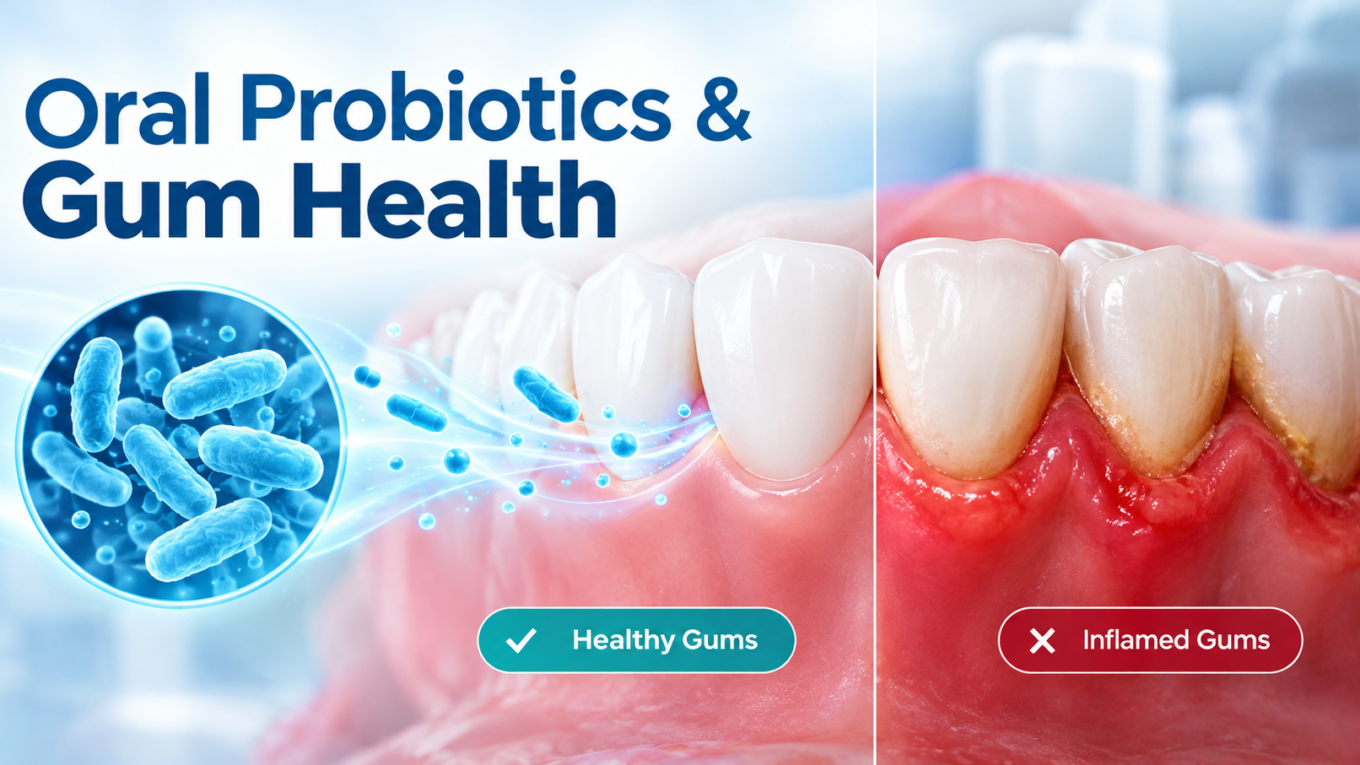
Oral Probiotics for Gum Disease: Can They Help?
Gum problems are among the most common oral health concerns, ranging from mild gingivitis to more advanced periodontal disease. Brushing, flossing, professional cleanings, and other forms of dental care remain the foundation of gum health. But as researchers learn more about the oral microbiome, probiotics are receiving increasing attention as a possible way to support a healthier microbial environment in the mouth.
So, can oral probiotics actually help with gum disease?
The answer is possibly, but the evidence is not strong enough to consider oral probiotics a replacement for professional dental treatment. Research suggests that certain probiotic strains may provide benefits when used alongside conventional periodontal care, particularly for some measures such as plaque, bleeding, and periodontal pocket depth. However, results vary considerably depending on the strain, dose, delivery method, treatment duration, and type of gum disease being studied.
What Is Gum Disease?
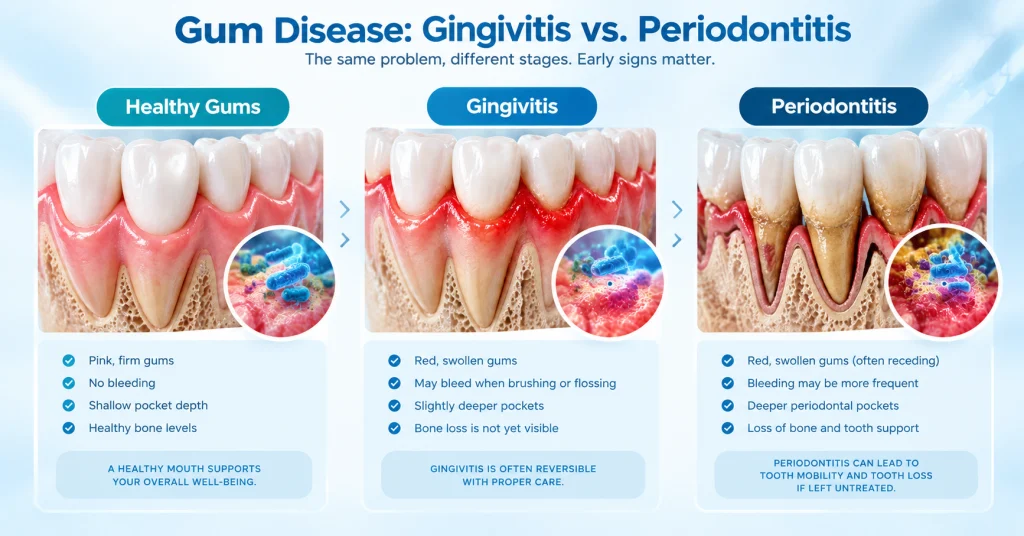
Gum disease refers to inflammatory conditions affecting the tissues surrounding and supporting the teeth.
The two terms you will encounter most often are gingivitis and periodontitis.
Gingivitis is generally the earlier and more reversible form. It is commonly associated with plaque buildup and may cause symptoms such as red, swollen, or bleeding gums.
Periodontitis is more advanced. It involves inflammation and damage to the tissues supporting the teeth and can eventually contribute to tooth mobility and tooth loss if left untreated.
Because periodontitis involves deeper tissues and structural damage, it is particularly important not to treat supplements as a substitute for dental care.
What Causes Gum Disease?
Gum disease is closely associated with the accumulation of dental plaque, which contains a complex community of microorganisms.
The problem is not simply that bacteria exist in the mouth. A healthy mouth naturally contains a diverse microbial community. Instead, changes in the microbial environment can contribute to an imbalance associated with inflammation and periodontal disease.
This is one reason the oral microbiome has become an important area of dental research.
Rather than attempting to eliminate every microorganism in the mouth, researchers are investigating ways to support a healthier microbial balance while controlling plaque and inflammation through established dental care.
How Do Oral Probiotics Work for Gum Health?
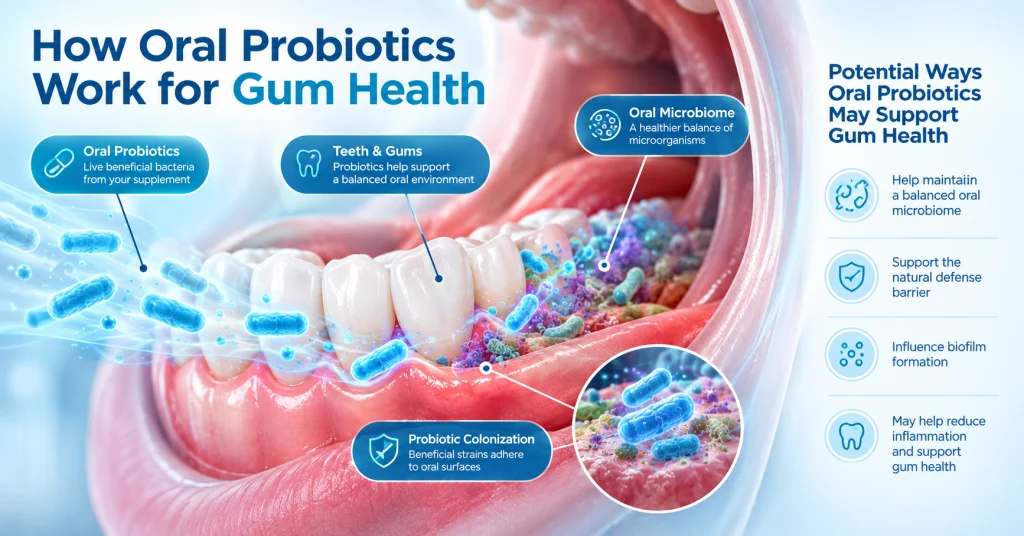
Oral probiotics are live microorganisms that are consumed with the intention of providing a health benefit.
Researchers have proposed several possible mechanisms for their effects in the mouth. Depending on the strain, probiotics may compete with other microorganisms for ecological niches, influence biofilm formation, produce antimicrobial substances, or interact with the body’s inflammatory response.
If you want a deeper explanation of this process, see our guide on how oral probiotics work for your oral microbiome.
Importantly, probiotic effects appear to be strain-specific. In other words, evidence that one probiotic strain may have an effect does not automatically mean that every probiotic product will produce the same result.
That distinction is particularly important when evaluating oral probiotic supplements.
Can Oral Probiotics Help With Gum Disease?
There is some encouraging evidence, but it is mixed.
A 2025 systematic review and meta-analysis examined 24 studies involving gingivitis and periodontitis. The researchers found some improvements in periodontal measures among people with periodontitis who used probiotics as an adjunct to periodontal therapy. However, the results for gingivitis were less convincing, and the authors emphasized differences between studies and the need for better standardized research.
Earlier systematic reviews have also reported potential improvements in measures such as clinical attachment level, probing pocket depth, bleeding on probing, plaque, and gingival scores when probiotics were used alongside conventional periodontal treatment. However, the findings have not been completely consistent, particularly over longer follow-up periods.
This means the most reasonable interpretation is that oral probiotics may have a supportive role, rather than being a standalone treatment for gum disease.
What Does the Research Actually Show?
One meta-analysis of randomized controlled trials found that probiotics used alongside scaling and root planing were associated with short-term improvements in several periodontal measures, including probing pocket depth, clinical attachment level, and bleeding on probing. However, some of these differences were no longer significant at longer follow-up periods.
Another meta-analysis focusing specifically on plaque-induced gingivitis found no clear evidence that oral probiotics significantly improved gingival index, plaque index, or bleeding on probing.
More recent research remains cautiously optimistic but highlights the same issue: probiotics may provide benefits for certain periodontal outcomes, but the evidence is not yet consistent enough to establish one universal probiotic approach for gum disease.
Which Oral Probiotic Strains Have Been Studied?
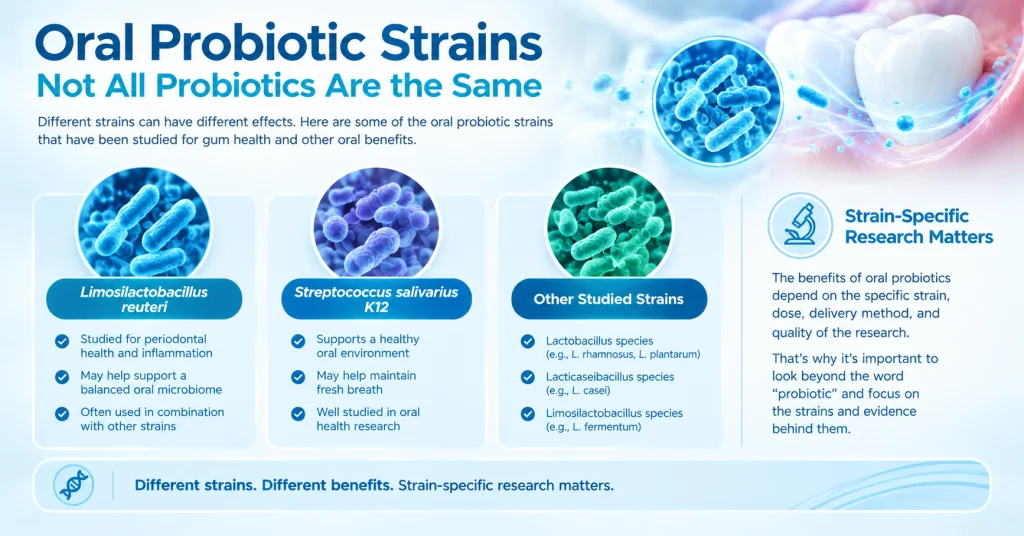
One of the most important points to understand is that not all probiotics are interchangeable.
Researchers have studied a variety of bacterial strains in oral health research, including species from the Lactobacillus, Lacticaseibacillus, Limosilactobacillus, and Streptococcus groups.
Some research has focused on Limosilactobacillus reuteri strains as an adjunct to periodontal therapy. Recent reviews suggest that certain probiotic interventions may improve clinical periodontal parameters, but differences between strains and treatment protocols make it difficult to generalize the findings to all products.
Another strain that receives attention in oral health research is Streptococcus salivarius K12.
For a closer look at this particular strain, see our guide to Streptococcus salivarius K12.
The key takeaway is simple: when evaluating an oral probiotic, look beyond the word “probiotic.” The specific strain, dose, delivery format, and evidence supporting that strain all matter.
Oral Probiotics vs. Traditional Gum Care
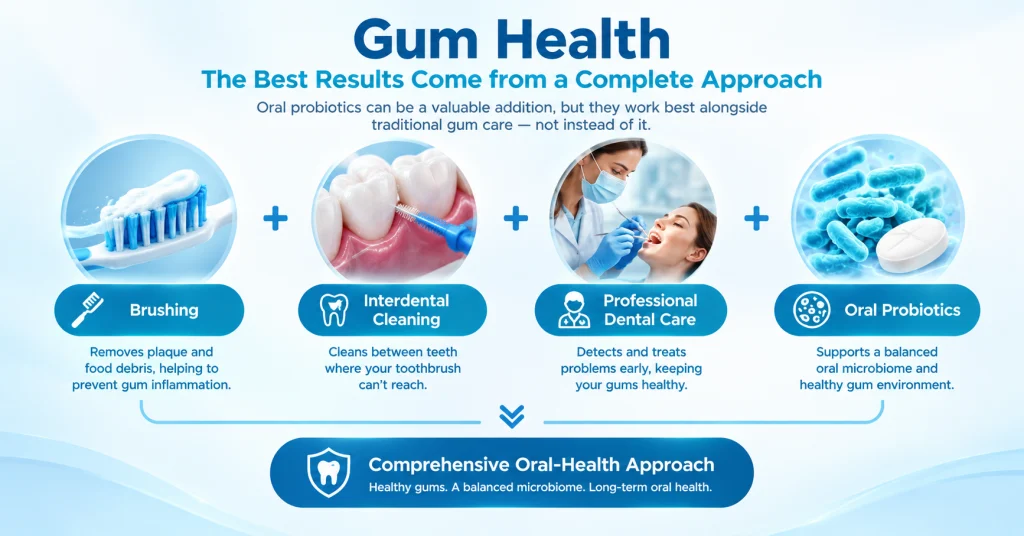
Oral probiotics should be viewed as a potential adjunct, not a replacement for established gum-care practices.
For everyday gum health, the basics remain important:
- Brush your teeth regularly with fluoride toothpaste.
- Clean between your teeth with floss or another appropriate interdental method.
- Maintain regular dental checkups and professional cleanings.
- Follow your dentist’s recommendations if you have gingivitis or periodontitis.
- Avoid smoking and other factors that can negatively affect periodontal health.
If you already have persistent gum bleeding, swelling, gum recession, loose teeth, or other signs of periodontal disease, professional evaluation is more important than simply adding a supplement.
Gum problems can also be associated with persistent oral odor. If bad breath is one of your main concerns, our guide to the best oral probiotics for bad breath explores the probiotic strains and approaches commonly discussed for oral odor.
Probiotics may eventually have a useful supporting role, but they should not be used to delay diagnosis or treatment.
Can Probiotics Help With Bleeding Gums?
Bleeding on probing is one of the periodontal outcomes researchers have investigated in probiotic studies.
Some clinical trials and meta-analyses have reported reductions in bleeding when probiotics were used alongside periodontal treatment. However, the magnitude and consistency of the effect vary between studies.
It is also important to distinguish occasional bleeding caused by irritation from persistent gum bleeding.
If your gums bleed regularly when brushing or flossing, that is worth discussing with a dental professional rather than assuming a probiotic supplement will resolve the underlying problem.
Can ProDentim Help Support Gum Health?
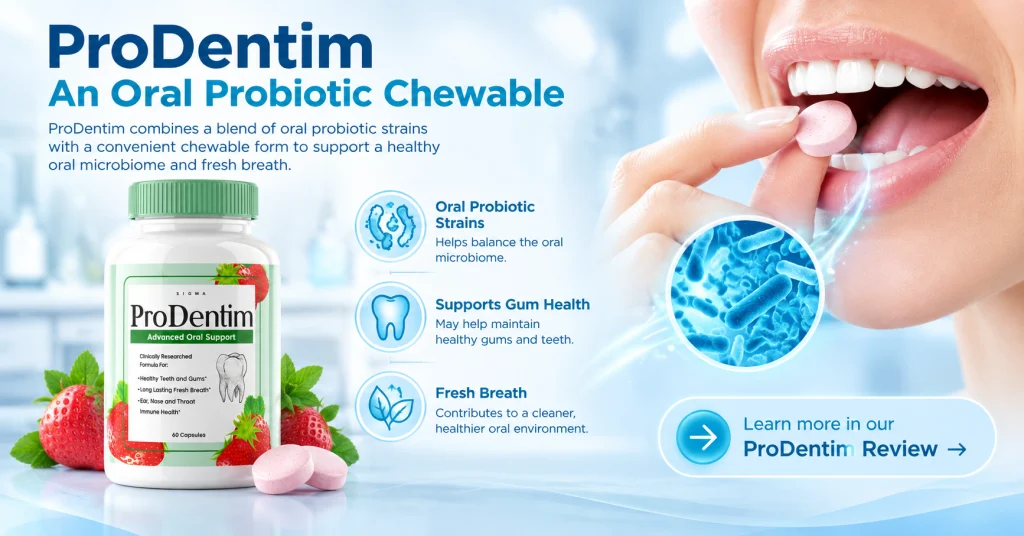
ProDentim is marketed as an oral probiotic supplement designed to support the oral microbiome.
However, it is important to distinguish between evidence for oral probiotics generally and evidence for a specific commercial product.
Research showing that certain probiotic strains may have potential periodontal benefits does not automatically prove that ProDentim will prevent, treat, or reverse gum disease.
If you are considering ProDentim, our ProDentim review looks more closely at its ingredients, probiotic strains, potential benefits, how it is used, and the evidence that can reasonably be applied to the product.
For that reason, ProDentim should be viewed as a potential oral-health supplement rather than a treatment for diagnosed periodontal disease.
What Should You Look For in an Oral Probiotic?
If you are considering an oral probiotic for gum health, several factors are worth checking.
1. Specific probiotic strains
A product should identify the strains it contains rather than simply listing “probiotics.”
Strain-specific research is important because different microorganisms can behave differently in the oral environment.
2. Evidence behind the strains
Look for research involving the actual strain or strains included in the product.
Evidence from a completely different probiotic should not automatically be treated as evidence for the product you are considering.
3. Delivery format
Oral probiotics may be available as lozenges, chewable tablets, powders, mouth rinses, or other formats.
The delivery method can influence how long microorganisms remain in contact with the oral environment.
4. Clear labeling
A reputable product should provide information about its ingredients, probiotic strains, and amounts rather than relying entirely on vague marketing language.
Oral Probiotics for Gum Disease: What Is the Bottom Line?
So, can oral probiotics help with gum disease?
They may help as a supportive addition to conventional periodontal care, but the evidence is not strong enough to consider them a standalone treatment.
Research published over the past several years suggests that some probiotic interventions may improve specific periodontal outcomes, particularly when used alongside professional treatment. At the same time, other studies have found little or no significant improvement, especially for certain measures of gingivitis.
The biggest issue is that “probiotics” are not one single treatment. Different strains, doses, formulations, and treatment durations can produce different results.
For someone interested in supporting their oral microbiome, an oral probiotic may be worth discussing with a dental professional. But it should complement—not replace—brushing, interdental cleaning, professional dental care, and appropriate treatment when gum disease is present.
Frequently Asked Questions
Can oral probiotics cure gum disease?
No. Current evidence does not support treating oral probiotics as a cure for gum disease. Some probiotic interventions may provide supportive benefits when combined with conventional periodontal treatment, but more research is needed.
Are oral probiotics good for gingivitis?
The evidence is mixed. Some studies suggest potential benefits, while other analyses have not found significant improvements in key measures such as plaque, gingival inflammation, or bleeding.
Can probiotics replace brushing and flossing?
No. Oral probiotics should not replace regular brushing, interdental cleaning, professional dental care, or treatment prescribed for periodontal disease.
Which probiotic is best for gum disease?
There is currently no single probiotic that can be considered universally “best” for gum disease. Research is strain-specific, and results vary depending on the probiotic, dose, delivery method, and clinical condition being studied.
Are oral probiotics worth considering?
For some people, oral probiotics may be worth considering as a complementary approach to oral health. However, expectations should remain realistic, and anyone with signs of periodontal disease should prioritize professional dental evaluation.
Final Thoughts
The research surrounding oral probiotics and gum disease is promising but still developing.
The strongest takeaway is not that probiotics can replace conventional gum treatment. Instead, it is that specific probiotic strains may have the potential to support periodontal health when used as part of a broader oral-care strategy.
As research continues, better-designed clinical trials should help clarify which strains, doses, and delivery formats are most useful.
For now, the most sensible approach is to treat oral probiotics as a potential complement to good oral hygiene and professional dental care—not as a substitute for them.